- Empty cart.
- Continuer vos achats

Unprecedented request before the Council of State: towards an improbable restitution of the Mona Lisa?
- Posté sur
Auctionlab news avec AFP
- Catégories: Culture,Featured English
Mise à jour 26 avril 2024 par Redak
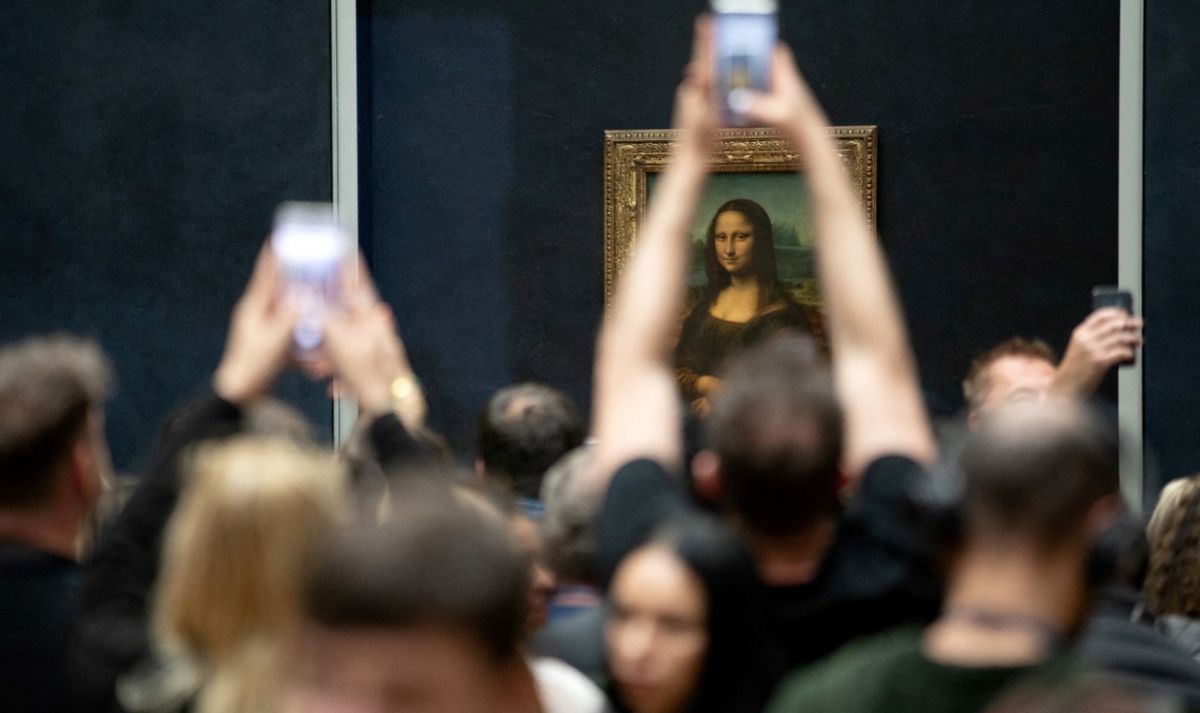
THE French Council of State examines this Thursday a request that is, to say the least, atypical, brought by the association International Refunds. This requests the restitution of the famous portrait of Mona Lisa, better known as the Mona Lisa, painted by Leonardo DeVinci. This masterful work, which sits on Louvre Museum, is at the heart of a legal debate which, despite its originality, seems to have little chance of success.
Historical and legal context of the request
The mysterious association International Refunds, whose organizational details remain unclear, took a bold initiative by asking the Council of State to declare the decision to Francis I to acquire the painting. The request includes the annulment of all subsequent acts based on this initial decision. The association argues that it acts on behalf of the descendants of Leonardo da Vinci’s heirs, with the hope that in the event of legal success, the work will be removed from the Louvre inventory.
Similar precedents and outcomes
It is interesting to note that this is not the first time that International Refunds take action of this type. In October 2022, the association attempted to have archaeological objects from the Army of the Orient removed from the Louvre inventory. Shortly after, in November 2022, she sought to obtain the cancellation of the registration of objects from the Summer Palace in Beijing, kept at the Château de Fontainebleau, following their seizure by French troops in 1860. All these attempts ended in failure, the Council of State having ruled that the association did not have the legal capacity required for such requests.
Legal analysis and implications
The decision of the Council of State concerning the Summer Palace can serve as jurisprudence in the case of the Mona Lisa. It stipulates that only individuals considering themselves to be the rightful owners of the property in question can legitimately request its restitution. This position highlights the difficulty of carrying out restitution actions for works of art of this scale, particularly when they involve properties of major cultural and historical importance for a country.
Historical context of the Mona Lisa
The story of the Mona Lisa is closely linked to that of Leonardo da Vinci and Francis I. Having fallen out of favor with the Medicis, Vinci came to France in 1516, where he was welcomed and pensioned by the king. The painter then offered several of his works, including the Mona Lisa, to Francis I. Since then, these works have remained in France, with the Mona Lisa on display at the Louvre since 1797.
Although the outcome of the processInternational Refunds seems uncertain, this case raises important questions about the ownership, restitution and conservation of works of art. Despite the association’s efforts, it seems likely that the Mona Lisa will continue to enchant visitors to the Louvre for many years to come. The persistence of such approaches, however, speaks to the continuing evolution of discussions around cultural rights and historical ownership.

Auctionlab news avec AFP
L'équipe rédactionnelle d'AuctionLab se distingue par son expertise profonde et sa passion pour l'art, le design et l'innovation. La collaboration étroite avec l'Agence France-Presse (AFP) souligne la crédibilité et la précision de l'information que nous fournissons à notre communauté mondiale d'amateurs d'art et d'antiquités. Avec l'appui de l'AFP, l'un des plus grands réseaux de journalisme dans le monde, nous nous engageons à livrer des reportages rigoureux, exacts et à jour sur l'évolution constante du marché des enchères. Nos auteurs puisent dans une variété de sources, allant des spécialistes de l'art et des antiquités aux leaders d'opinion et aux acteurs du marché, pour vous donner un aperçu complet des tendances actuelles. Notre équipe de rédaction, toujours en veille sur les dernières nouveautés du secteur, vous propose des analyses détaillées, des portraits d'artistes, des commentaires sur les pièces exceptionnelles et les tendances du marché. Nos articles et reportages sont basés sur les normes journalistiques internationales les plus strictes, une tradition que nous sommes fiers de perpétuer grâce à notre partenariat avec l'AFP. L'AFP, avec sa présence dans plus de 151 pays, offre à AuctionLab une perspective globale, qui permet de rester en phase avec les mouvements et les dynamiques du marché de l'art à l'échelle mondiale. Les analyses et les reportages de notre équipe sont enrichis par cette vision internationale, qui garantit une couverture complète des événements clés du secteur. La collaboration entre AuctionLab et l'AFP est un gage de sérieux, de professionnalisme et d'exactitude. Avec cette garantie d'information de qualité, AuctionLab s'affirme comme une plateforme incontournable pour tous les amateurs d'art et d'antiquités à la recherche de nouveautés, de tendances et d'analyses de fond. En tant qu'auteur principal pour AuctionLab, notre équipe s'efforce de produire des contenus de qualité, fiables et pertinents, enrichissant ainsi la conversation culturelle et éclairant les subtilités du monde des enchères.
Tous les articles de l’auteur