- Empty cart.
- Continuer vos achats

Constantin Brancusi: The brilliance of sculptural modernity shines at the Center Pompidou
- Posté sur
Cyril CH
- Catégories: Culture,Featured English
Mise à jour 26 avril 2024 par Redak
In the shadow of the columns of the Center Pompidou in Paris, an unprecedented exhibition is revealed, a vibrant tribute to the father of modern sculpture, Constantin Brancusi. This major retrospective, the first of this scale in France, offers a fascinating insight into the work of the Romanian artist, from the 19th century to the dazzling modernity of his creations.
The Historical Context of Brancusi
Constantin Brancusi, born in 1876 in Romania, arrived in Paris in 1904, capturing the essence of a city in full artistic ferment. Close to emblematic figures like Modigliani and Duchamp, Brancusi shaped his art in the heart of Montparnasse, becoming a central figure of the artistic avant-gardes. His works, inherited by the museum upon his death in 1957, bear witness to this rich cultural period and its evolution towards a resolutely modern style.
The Exhibition at the Center Pompidou
Organized by Ariane Coulondre, Julie Jones and Valérie Loth, the exhibition brings together more than 120 sculptures and hundreds of drawings, notebooks and paintings. These works, from prestigious collections such as Tate Modern and MoMA, are presented in an innovative scenography which embraces the fluidity and light characteristic of Brancusi’s art.

Brancusi’s Workshop: A Creative Universe
At the center of the exhibition, Brancusi’s studio is recreated, offering visitors an intimate glimpse into his working environment. Tools, furniture and even a small forge make up this place where the artist designed some of his most famous works, such as the “Endless Column”. This setting, both a place of life and creation, illustrates the way in which Brancusi integrated his daily life into his artistic process, organizing evenings and happenings which marked the Parisian cultural landscape.
The Major Themes of Brancusi’s Work
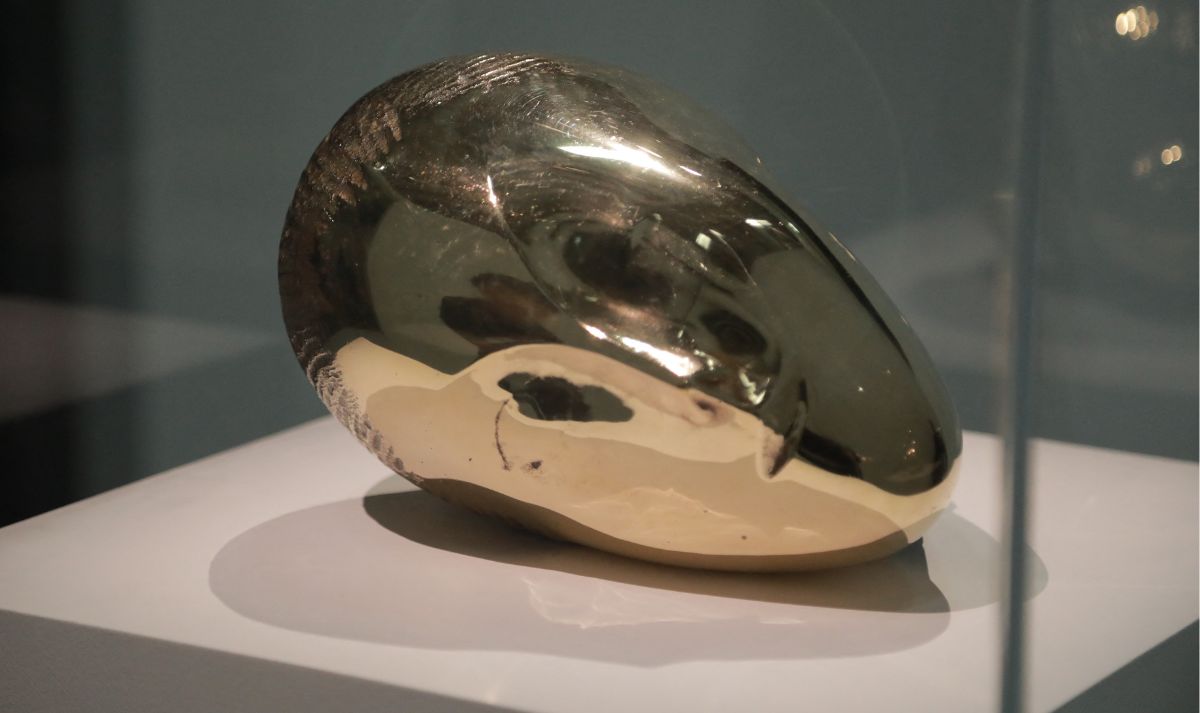
The exhibition explores the different facets of Brancusi’s work, from the simplification of form in sculptures like “Sleeping Muse” to the complexity of the relationships between space and volume, as in “The Bird in the space”. Each piece reflects an exploration of formal and material ambiguity, highlighting Brancusi’s genius in the field of modern sculpture.

Innovations and Influences
Through major works and comparisons with contemporaries such as Rodin and Gauguin, the exhibition illustrates how Brancusi developed a unique sculptural language, marking a break with classical tradition. His radical approach is evidenced by works like “The Kiss,” where two figures merge in a block of raw stone, symbolizing a new sculptural aesthetic.
Brancusi’s Legacy to Sculpture
Constantin Brancusi leaves behind a lasting legacy, influencing future generations of artists. His approach, both minimalist and deeply expressive, continues to resonate in the world of contemporary art, making him an emblematic figure of modernity.
Constantin Brancusi’s exhibition at the Center Pompidou is not only a retrospective, it is a tribute to an artist who redefined the contours of modern sculpture. Walking through the rooms of this exhibition, visitors discover not just the story of an artist, but the revolution of an art that continues to challenge conventions and inspire innovation. A must-visit for any art lover in Paris, witnessing Brancusi’s ingenuity and vision.
Hours of operation : The Center Pompidou is open every day except Tuesday, from 11 a.m. to 9 p.m. Late nights on Thursdays until 11 p.m. allow you to visit the exhibition in the evening.
Prices :
- Full price: 14 euros
- Reduced price: 11 euros (students, under 25 years old, and seniors)
- Free entry for children under 18 and Pompidou Pass holders.
Address : Center Pompidou, Place Georges-Pompidou, 75004 Paris, France.
Access : Metro: Rambuteau (line 11), Hôtel de Ville (lines 1 and 11), Châtelet (lines 1, 4, 7, 11, and 14) Bus: lines 29, 38, 47, and 75 Parking: Parking Beaubourg, Parking Les Halles, and Town Hall Parking
Reservation and Ticketing: It is advisable to book your tickets in advance on the official Center Pompidou website to guarantee entry and avoid long queues. Tickets can be purchased online at the following address: Center Pompidou Ticket Office
Services Available: The Center Pompidou offers audio guides available in several languages to enrich your visit to the exhibition. Guided tours are also offered for groups and schools upon prior reservation.
