- Empty cart.
- Continuer vos achats

Richard Serra: The monumental experience of minimalism
- Posté sur
Cyril CH
- Catégories: Culture,Featured English
Mise à jour 26 avril 2024 par Redak
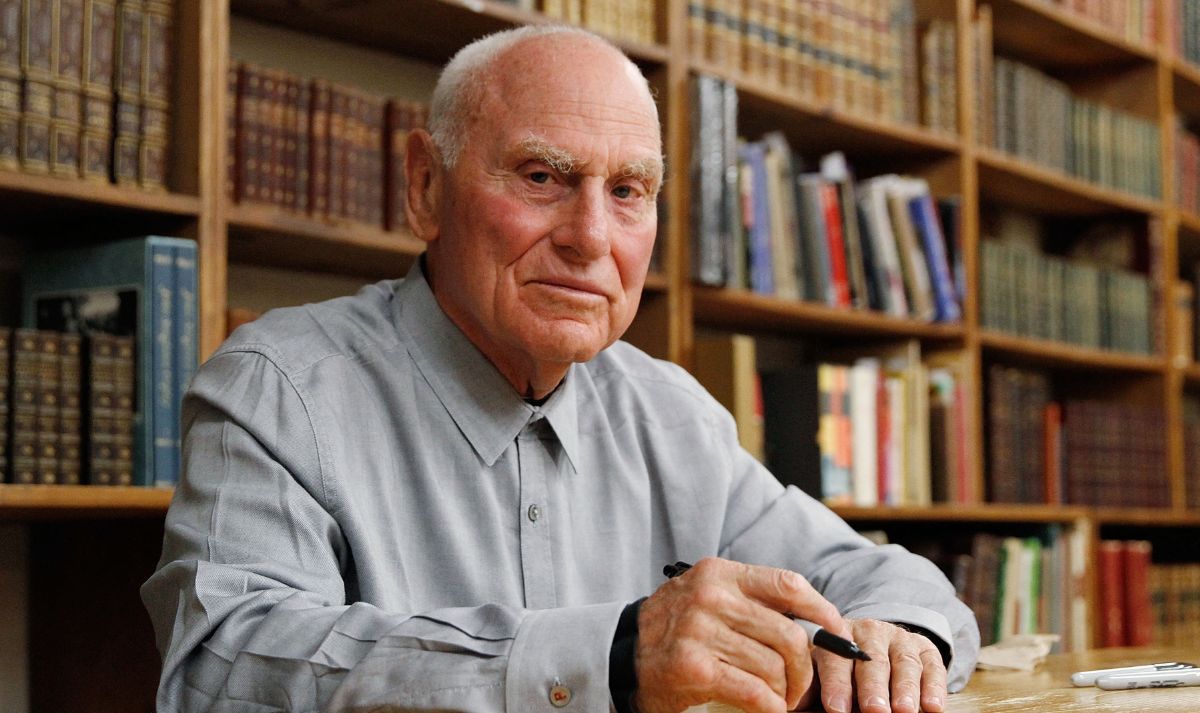
Paris, France – The death of Richard Serra, which occurred on March 26, 2024 at the age of 85, marks the end of an era for contemporary art. Known for his steel sculptures that are both monumental and minimalist, this American artist has been able to redefine our perception of space and the environment through his art.
Art as an experience rather than an object
Serra’s artistic philosophy was deeply rooted in experience. According to him, his works were not simple objects to be observed but experiences to be had. This vision was highlighted in iconic locations such as the nave of the Grand Palais in Paris and the Guggenheim Museum in Bilbao, where his installations invited viewers to get lost in steel labyrinths.
A childhood marked by industry
Born in San Francisco to parents of Russian and Spanish origins, Serra was always fascinated by heavy industry. This fascination dates back to his earliest childhood memories, when he observed the launching of battleships in shipyards. These memories fueled his imagination and ultimately shaped his artistic work.
From literature to sculpture
After studying English literature, Serra turned to visual arts at Yale, then continued his training in Paris, attending Brancusi’s studio. It was there, as well as in front of Velasquez’s “Las Meninas” in Spain, that he began to conceive of art as a dynamic interaction between the work and the viewer.
International debut in New York
Based in New York in the late 1960s, Serra explored various materials before favoring Corten steel, known for its unique strength and patina properties. His works, often outdoor installations, invited physical and emotional exploration, sometimes at the risk of viewers’ comfort, as evidenced by the controversy surrounding “Tilted Arc.”
A lasting legacy
Beyond his sculptures, Richard Serra leaves behind an influential artistic manifesto and a body of works that continue to dialogue with their environments. From Paris to Bilbao, via the desert of Qatar, his monumental installations remain immersive experiences that challenge our usual perceptions of art and space.
Richard Serra’s work, with its emphasis on experience rather than pure form, will continue to inspire and provoke. His sculptures are not simple structures: they are passages towards a deeper understanding of our environment and ourselves. Despite the loss of this monumental artist, his legacy persists, monumental and indelible in the landscape of contemporary art.
