- Empty cart.
- Continuer vos achats

In Rome, a Sanctuary for Antiquities Rescued from Trafficking
- Posté sur
Cyril CH
- Catégories: Culture,Featured English
Mise à jour 10 juin 2024 par Redak
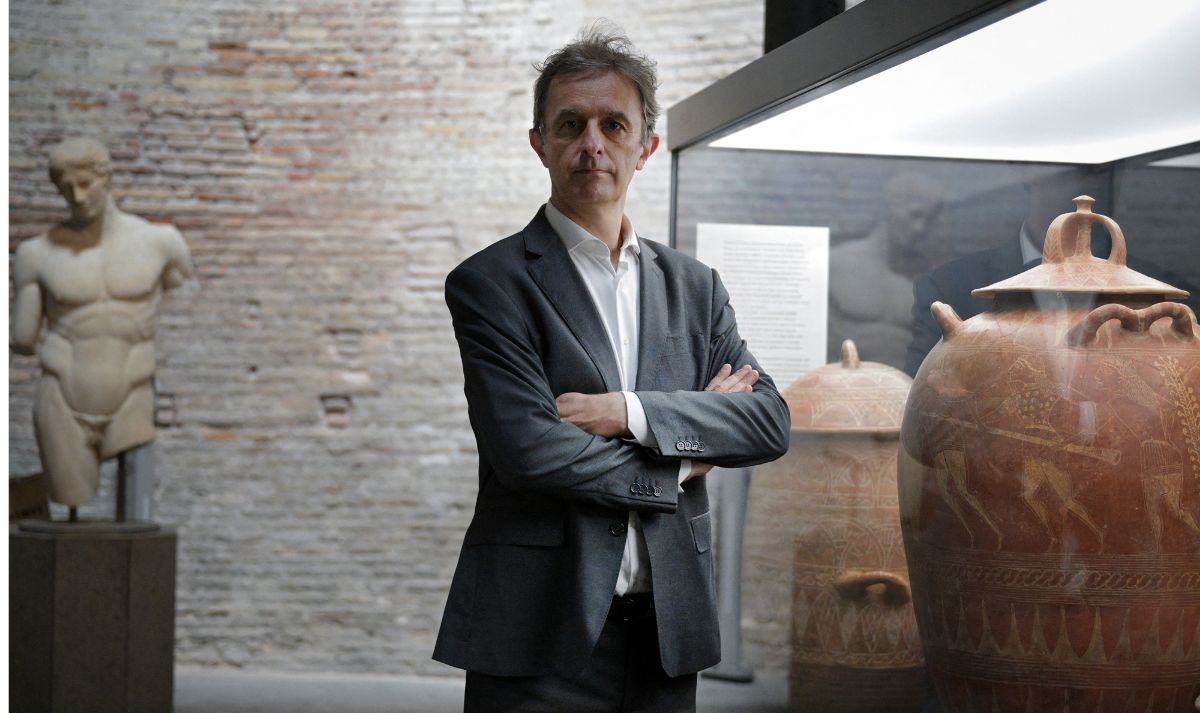
In Rome, antiquities recovered after being looted and illegally sold have found refuge in a unique place: the Roman National Museum. For two years, this museum has dedicated an entire room to these rescued treasures, thus offering them a sanctuary. This museum, poetically named “Museum of Saved Art”, is located in the heart of the majestic Baths of Diocletian, the largest in ancient Rome.
The History of the Exhibited Works
The museum tells the fascinating story of these works: how they were looted during clandestine excavations in Etruscan necropolises north of Rome or in Puglia, the region corresponding to the heel of the Italian Boot. These treasures were then illegally taken out of Italy, passing through a network of antique dealers based in particular in Geneva, Switzerland, before being sold to foreign collectors.
The director of the museum, French archaeologist Stéphane Verger, explains that some of these objects have even been resold or donated to major American museums. For years, Italy has been carrying out legal and diplomatic procedures to recover these pieces of its cultural heritage.
A Legal and Diplomatic Combat
One of the recent successes of this battle is the return in 2022 of a set of three terracotta statues representing “Orpheus and the Sirens”, which the Getty Museum in Los Angeles has agreed to return to Italy. The Getty Museum admitted that these statues came from illegal excavations. Back in Italy, the trio was exhibited at the Museum of Saved Art in an exhibition dedicated to Italian terracottas.
The museum does not just show these works, but strives to contextualize them through thematic exhibitions. Stéphane Verger insists on the fact that it is not a question of repeating like the great museums by simply exhibiting beautiful works, but of presenting these treasures in a historical and cultural context.
A Temporary Stopover for the Works
The Museum of Saved Arts considers itself a simple stopover for these works. “The works don’t stay here,” explains Stéphane Verger. “After having been exhibited for a while, they are repatriated to other Italian museums”, those where they should have been exhibited if they had not been exported and sold illegally.
Clandestine excavations, particularly those targeting necropolises and carried out by “tombaroli” (grave robbers), have very negative consequences on the knowledge of ancient cultures. When an object is stolen, its discovery is irreparably altered, and any knowledge that could be gleaned from it is lost forever.
A Changing Museum
Currently closed for work in preparation for the jubilee of 2025, the year declared holy by Pope Francis, the museum is preparing to welcome millions of visitors. This constantly changing museum adapts its exhibitions to highlight the antiquities it houses.
One possible future treasure of the museum could be the “Fano Athlete”, a splendid bronze statue currently on display at the Getty Museum. The European Court of Human Rights recently ruled in favor of Italy in the dispute over the ownership of this work. Discovered 60 years ago in the Adriatic Sea, this statue from the 4th century BC represents a naked athlete or the Macedonian prince Demetrios Poliorcetes. It was acquired by the Getty Museum for $3.9 million after a long journey through various owners.
The Future of the Museum of Saved Art
While awaiting the arrival of new treasures, the Museum of Saved Arts continues to serve as a sanctuary for dozens of amphorae, coins and busts waiting to find their place in other Italian museums. This unique place, dedicated to the preservation and promotion of antiquities rescued from illegal trafficking, plays a crucial role in the fight against the looting of cultural heritage and in the return of treasures to their places of origin.
