- Empty cart.
- Continuer vos achats





France: Suspended Prison Sentence for Theft of a Banksy Work in Paris
- Posté sur
Cyril CH
- Catégories: Featured English,Justice case
Mise à jour 21 juin 2024 par Redak
A man was sentenced to two years in prison in France on Wednesday for stealing a work by Banksy in 2019. The spectacular theft, carried out using a bucket truck, caused a stir in the art world and highlighted the issues surrounding street art works.
Flight Details
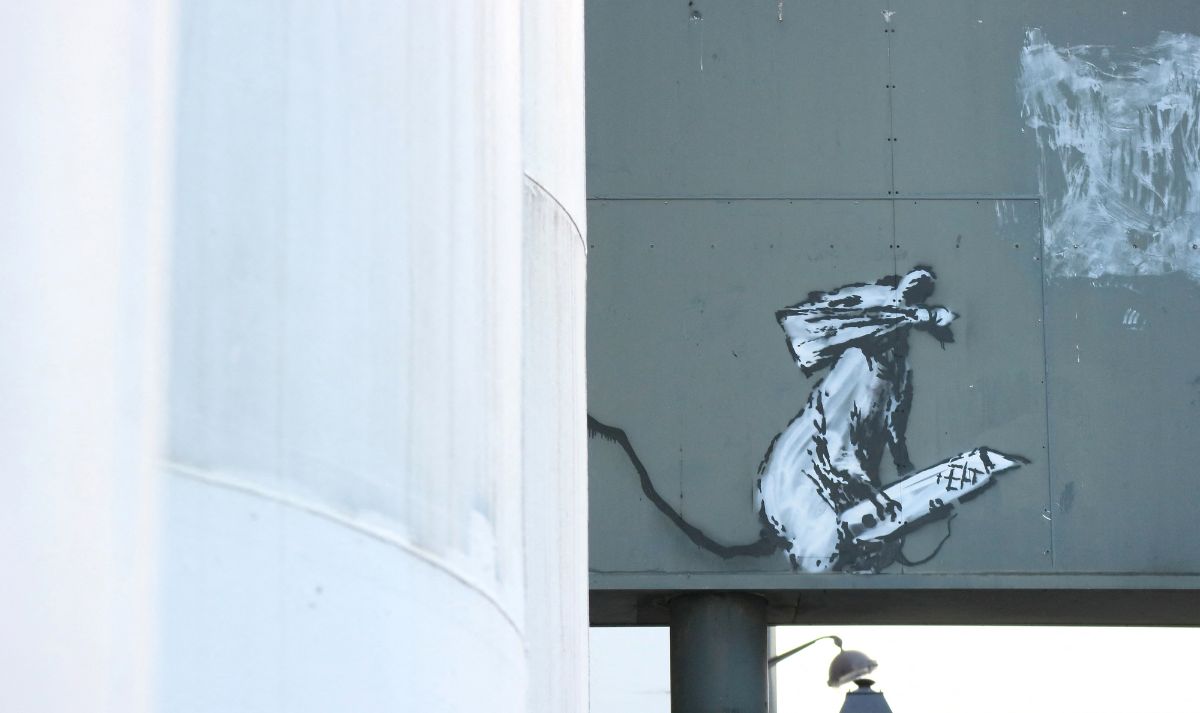
Mejdi R., a 38-year-old musical artist, was found guilty of the theft of a Banksy drawing, made on the back of a parking sign near the Center Pompidou in Paris. Using a bucket truck and a grinder, the thief operated in the middle of the night, changing the vehicle’s license plates to avoid being identified.
A Defense Based on a Reduced Request
At the hearing on June 10, Mejdi R. admitted his participation in the theft, claiming however that he was acting at the request of Banksy himself, whom he considers a friend. According to him, Banksy wanted to prevent others from profiting from his work and to denounce the hypocrisy of the capitalist system which determines the value of works of art.
Sanctions Imposed
In addition to the two-year suspended prison sentence, Mejdi R. was sentenced to a fine of 30,000 euros and will have to compensate the Center Pompidou. The work, representing a rat equipped with a cutter, was perceived by the defendant as a simple “deterioration of a metal plate” without cultural value.
Reactions and Consequences
This is not the first time that French justice has looked into the theft of a work by Banksy. In June 2022, eight men were convicted in Paris for stealing or transporting a door to the Bataclan decorated with a painting by Banksy, paying tribute to the victims of the attacks of November 13, 2015.
A Meticulously Prepared Act
The theft of the work from the Center Pompidou was carried out with great care. The thief used a bucket truck rented for the occasion, a grinder to remove the work, and changed the vehicle’s license plates to avoid being identified.
Banksy: A Figure of Controversy
Banksy, the British artist known for his provocative and often politically charged street art, regularly sparks debates about the value and ownership of urban art. His works, often created illegally on public or private property, quickly become objects of desire.
The Value of Street Art Works
The case of Mejdi R. raises questions about the value of street art works and their protection. Banksy himself has often criticized the commercialization of his works, which are sometimes removed from walls and sold for astronomical sums.
The Mejdi R. affair highlights the challenges related to the protection of street art works and the debates around their value. The conviction of Mejdi R. sends a strong message about the importance of respecting artistic creations, whether they are made in galleries or on the street. The judgment also reminds us that justice can intervene to protect these works, despite their often ephemeral and controversial nature.
